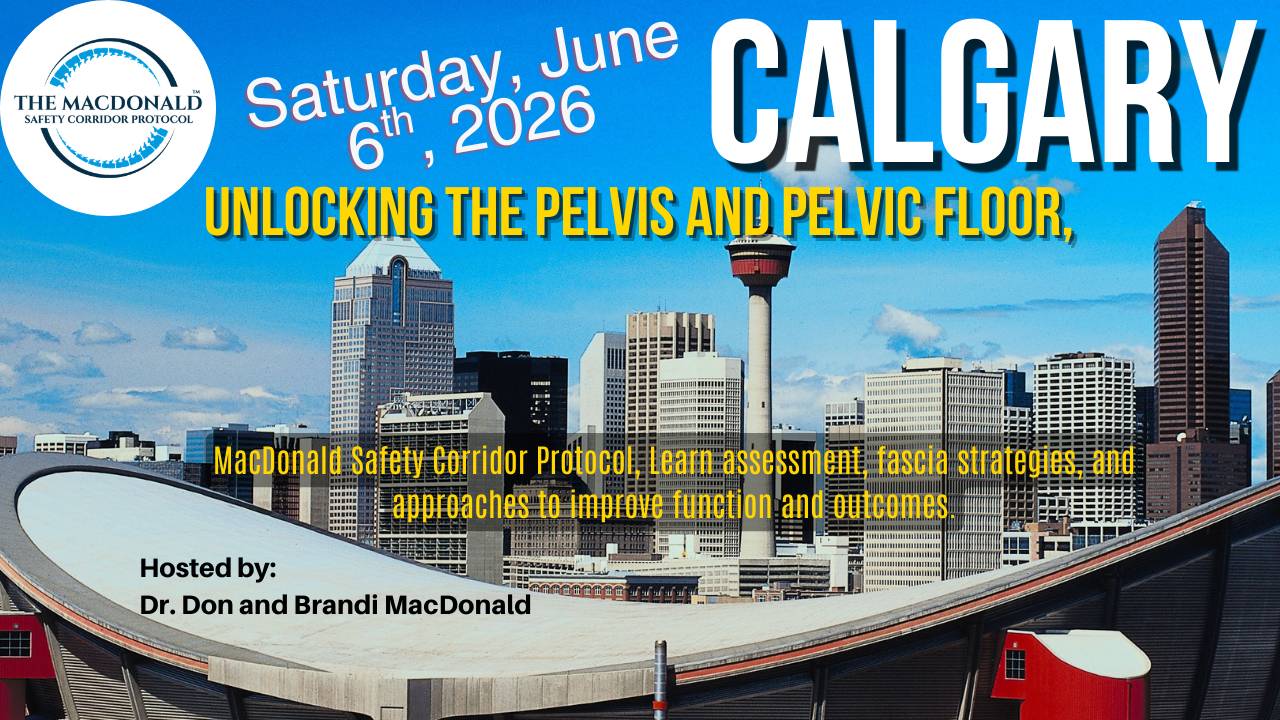
Calgary: MacDonald Safety Corridor, Sat, June 6th, 2026: Unlocking the pelvis and pelvic floor
DOCTOR Registration!
The pelvic floor is one of the most overlooked and misunderstood regions in chiropractic, yet it plays a critical role in stability, movement, and nervous system regulation. When it is not functioning well, it can influence everything from low back and hip patterns to breathing, circulation, and how the body organizes tension through the fascial system. In this hands-on workshop, you will learn how to better assess and understand the pelvic floor and pelvis, and walk away with practical strategies you can immediately integrate into your practice to help your adjustments hold and your patients respond more consistently.
What You’ll Gain
✔ A clearer understanding of how pelvic floor dysfunction influences the spine, hips, and core stability
✔ Insight into how the pelvic floor affects fascia, movement patterns, and whole-body tension
✔ Practical assessment strategies to identify pelvic floor-related patterns in your patients
✔ A better understanding of how pelvic floor function impacts breathing, circulation, and lymphatic flow
✔ Recognition of how pelvic floor dysfunction can contribute to nerve irritation and chronic compensation patterns
✔ Simple, applicable strategies to support better function and help your adjustments hold longer
✔ A more complete clinical lens to address stubborn cases that are not responding as expected
Limited Spots
This will be a small, hands-on workshop to allow for better learning and integration.
Only 1 spot left
Lunch is on your own
The host hotel is:
Calgary Downtown Marriott Hotel

Dr S, Ontario, Canada
I believe that every Chiropractor should be adjusting thru a Polyvagal lens. It just makes sense once you understand what that even means! lol. Don and Brandi do a magnificent job of explaining the Polyvagal theory and provide examples of simple changes you can make in your office on Monday morning to be a more effective Chiropractor.
Dr T, Ontario Canada
This excellent protocol works perfectly in line with a principled Chiropractic approach to assessing the spine and nervous system. The enhancements of this protocol can apply to any technique, and the intertwined polyvagal approach makes sense - physiologically and anatomically. This is one of the most patient-centered approaches I’ve seen!
Dr. E, Ireland
I would say the MacDonald Safety Corridor is a more in-depth way of assessing and adjusting - using modified adjustments which will enhance the ones we already use in practice. I believe if more of us adjust like this we will have a much more relaxed community.